
Table of Contents
ToggleTower of babel
internal link-https://blog.rcland.in/wp-admin
Introduction
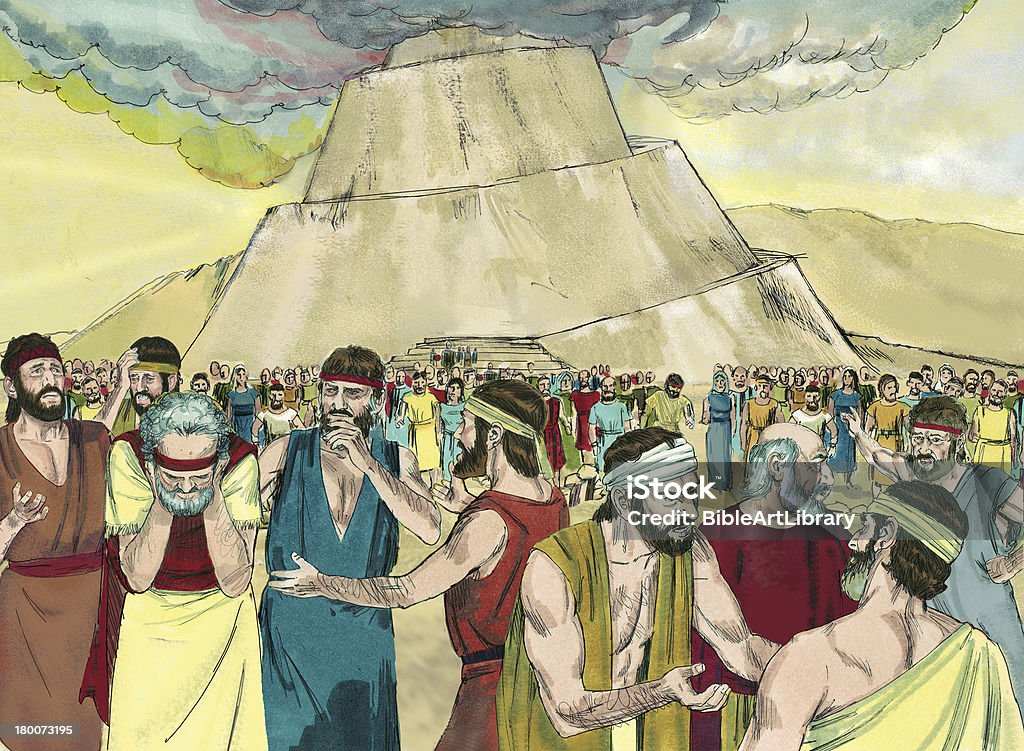
The Tower of Babel is one of the most fascinating and symbolic stories found in the Book of Genesis (Genesis 11:1–9). It takes place after the Flood and the covenant God made with Noah. Humanity was once united by a single language and common purpose, but their unity led to prideful ambitions. They attempted to build a tower that reached the heavens, not to glorify God, but to make a name for themselves. This story explains the origins of diverse languages, cultures, and the scattering of humanity across the earth.
Background
After the Great Flood, Noah’s descendants began to repopulate the earth. God had commanded humanity to “be fruitful, multiply, and fill the earth.” However, instead of spreading out, the people gathered together in one place. They settled in the land of Shinar (later known as Babylon), a fertile plain in Mesopotamia, near the Tigris and Euphrates rivers.
The Ambition of Humanity
The people of Shinar conceived a bold idea:
- “Let us build ourselves a city, with a tower that reaches to the heavens, so that we may make a name for ourselves and not be scattered over the face of the whole earth.”
- To build a city – a symbol of human achievement and strength.
- To build a tower to the heavens – an attempt to reach God’s domain, perhaps to challenge His authority.
Human Pride vs. Divine Will
The tower project was not just a construction plan; it was a symbol of humanity’s pride and desire for independence from God. Instead of glorifying the Creator, they glorified themselves. Instead of spreading and filling the earth, as God commanded,
God’s Response
God observed their actions. The text says, “The Lord came down to see the city and the tower that the men were building.” Though God is all-seeing, this language emphasizes the smallness of human effort compared to divine greatness.
The Scattering of Nations
As a result, the people abandoned their great project. They scattered across the earth, just as God originally commanded. The city was left unfinished, and the tower stood as a reminder of human pride.
Symbolism and Lessons
- Unity Without God Is Dangerous
Unity itself is not bad—indeed, the early church in the New Testament was called to be united in Christ. But unity built on pride and rebellion leads to destruction. - Human Pride Brings Division
The builders sought to glorify themselves rather than God. Pride caused confusion and scattering. This teaches that arrogance leads to downfall.
Later Interpretations
The Tower of Babel story influenced many later traditions and ideas:
- Jewish Thought: Rabbis often saw Babel as a symbol of rebellion and idolatry. Some traditions suggest that Nimrod, a mighty ruler, led the building project.
- Christian Teachings: For Christians, Babel represents human pride, contrasted with Pentecost in the New Testament, where the Holy Spirit enabled people of many languages to understand the gospel.
- Cultural Symbol: Over time, “Babel” became a metaphor for confusion, chaos, and failed human ambition.
Modern Reflections
Even today, the Tower of Babel carries lessons for individuals and societies:
- Ambition without humility leads to failure.
- Technology and progress must be guided by wisdom and morality.
- Human cooperation, while powerful, must not replace dependence on God.
Conclusion
The Tower of Babel is more than an ancient tale. It is a profound story about the dangers of pride, the limits of human achievement, and the sovereignty of God. Humanity once tried to build a monument to its own greatness, but God turned it into a lesson in humility. From one language came many, and from one city came nations spread across the earth.
follow up my you tube channel:-https://youtube.com/@prayagisenu?si=KM-jCdF5ipYZp76B